Thursday, 15 November 2018

Good afternoon ELL! Today we'll be reflecting on our rubrics. Some of you have done this before for other rubrics. Here we go:


Log in to your portal HERE.

Level 1-2
Complete a self-reflection by copying the sentence starters below into the comments section of the summative rubric for term 1.  Look at your rubric for information you need to complete these sentences.

1.     My strongest area of language is (Speaking and Listening, Reading, or Writing) …
2.     The area of language that I most need to improve is …
3.     In Speaking and Listening my strongest skill is …. And one skill that needs improvement is….
4.     In the Reading area my strongest skill is…. And one skill that needs improvement is…..
5.     In the Writing area my strongest skill is…. And one skill that needs improvement is…..
6.     Next term I need to work on 1…2... 3...
7.     There are 3 things (strategies) I can do to improve my language skills and they are:
8.     Attending class regularly, as well as being on time are important. Please rate your attendance and being on time. (1= Need improvement, 2= Satisfactory, 3= Good).  Explain why you gave yourself that score.
9.     Class participation and effort are also important.  Please rate yourself at class participation and effort. (1= Need improvement, 2= Satisfactory, 3= Good).  Why did you choose this score?

Wednesday, 14 November 2018

Another beautiful, but rainy day. Here we go!

https://newsela.com/read/comic-book-creator-stan-lee-dies/id/47461/


  1. Who was Stan Lee?
  2. How did he make his comic books interesting? (3+ sentences)
  3. Stan Lee made characters that were not perfect. Please give 3 examples.
  4. Stan Lee was sad at the beginning of his job. What did he do to become happy?
  5. What superheroes from DC Comics did Stan Lee help make?

Thursday, 8 November 2018

Good morning ELL class!

Here's the article we'll read this time:
https://newsela.com/read/florida-college-zombie-expert/id/47092/

This article is more difficult. Please read carefully.

  1. Can you be convicted of a crime if you aren't conscious?
  2. What is diminished capacity? Why is this important for crime?
  3. Why does Smaw want to teach a class about zombies?
  4. In 1997, what did a sleepwalker do?
  5. What are Chinese zombie movies about?

Monday, 5 November 2018

Hey ELL 1/2 Social Studies! Good afternoon!

https://newsela.com/read/little-free-libraries/id/46885/


1.     What is a little free library?
2.     Why do you think people make little free libraries?
3.     Who started these little free libraries?
4.     What is special about how people make little free libraries?
5.     Who is Linda Carrier-Metz and what did she do?
6.     Are there any problems with little free libraries? Should we have more of them in the community? What are your thoughts?

Thursday, 25 October 2018

English 11 Synthesis Writing
Before we get into the details of synthesis writing, you might consider this link. It's one of the most thorough, detailed resources on synthesis writing you can keep with you through high school and university. Keep in mind, it is copyrighted material.

Ok here goes!

THE ARGUMENT SYNTHESIS: The purpose of an argument synthesis is for you to present your own point of view - supported, of course, by relevant facts, drawn from sources, and presented in a logical manner. The thesis of an argumentative essay is debatable. It makes a proposition about which reasonable people could disagree, and any two writers working with the same source materials could conceive of and support other, opposite theses.

HOW TO WRITE SYNTHESIS ESSAYS
  1. Consider your purpose in writing. Read the topic assignment carefully. What are you trying to accomplish in your essay? How will this purpose shape the way you approach your sources? 
  2. Select and carefully read your sources, according to your purpose. When rereading, label or underline the passages for main ideas, key terms, and any details you want to use in the synthesis. 
  3. Formulate a thesis. Your thesis is the main idea that you want to present in your synthesis. It must be expressed as a complete sentence and include a statement of the topic and your assertion about that topic. Sometimes the thesis is the first sentence, but more often it is the final sentence of the first paragraph. 
  4. Decide how you will use your source material and take notes. How will the information and the ideas in your sources help you to fulfill your purpose? Re-read your sources and write down the information from your sources that will best develop and support your thesis. 
  5. Develop and organizational plan, according to your thesis. How will you arrange your material? 
  6. Write the first draft of your synthesis, following your organizational plan. Be flexible with your plan, however, and allow yourself room to incorporate new ideas you discover as you write. 
  7. Revise your synthesis. Insert transitional words and phrases where necessary. Integrate all quotations so they flow smoothly within your own sentences. 
TECHNIQUES FOR DEVELOPING SYNTHESIS ESSAYS
SUMMARY: The simplest - and least sophisticated - way of organizing a synthesis essay is to summarize your most relevant sources, one after the other, but generally with the most important source(s) last. The problem with this approach is that it reveals little or no independent thought on your part. Its main virtue is that it at least grounds your paper in relevant and specific evidence.

Summary can be useful - and sophisticated - if handled judiciously, selectively, and in combination with other techniques. At some time you may need to summarize a crucial source in some detail. At another point, you may wish to summarize a key section or paragraph of a source in a single sentence. Try to anticipate what your reader needs to know at any given point of your paper in order to comprehend or appreciate fully the point you are making.

EXAMPLE OR ILLUSTRATION: At one or more points in your paper, you may wish to refer to a particularly illuminating example or illustration from your source material. You might paraphrase this example (i.e., recount it, in some detail, in your own words), summarize it, or quote it directly from your source. In all these cases, of course, you would properly credit your source.

TWO (OR MORE) REASONS: The "two reasons" approach can be an extremely effective method of development. You simply state your thesis, then offer reasons why the statement is true, supported by evidence from your sources. You can advance as many reasons for the truth of your thesis as needed; but save the most important reason(s) for last, because the end of the paper is what will remain most clearly in the reader's mind.

STRAWMAN: When you use the strawman technique, you present an argument against your thesis, but immediately afterward you show that this argument is weak or flawed. The advantage of this technique is that you demonstrate your awareness of the other side of the argument and show that you are prepared to answer it. The strawman argument first presents an introduction and thesis, then the main opposing argument, a refutation of the opposing argument, and finally a positive argument.

CONCESSION: Like the strawman, the concession technique presents the opposing viewpoint, but it does not proceed to demolish the opposition. Instead, it concedes that the opposition has a valid point but that, even so, the positive argument is the stronger one. This method is particularly valuable when you know your reader holds the opposing view.

COMPARISON AND CONTRAST: Comparison and contrast techniques enable you to examine two subjects (or sources) in terms of one another. When you compare, you consider similarities. When you contrast, you consider differences. By comparing and contrasting, you perform a multifaceted analysis that often suggests subtleties that otherwise might not have come to your attention.

(Copyright Cassie Carter with significant edits / MSU, 2018)

Tuesday, 23 October 2018

English 11
Thesis statements. Check out these links:
Good and Bad Thesis Statements


English 9 SPECTRUM
Greetings SPECTRUM! It is time for one of the most challenging poetic forms: The Shakespearean Sonnet. Let's have a look:

--- Sonnet 18
Shall I compare thee to a summer's day? 
Thou art more lovely and more temperate:
Rough winds do shake the darling buds of May,
And summer's lease hath all too short a date: 
Sometime too hot the eye of heaven shines,
And often is his gold complexion dimm'd; 
And every fair from fair sometime declines,
By chance, or nature's changing course, untrimm'd;
But thy eternal summer shall not fade
Nor lose possession of that fair thou ow'st;
Nor shall Death brag thou wander'st in his shade,
When in eternal lines to time thou grow'st; 
      So long as men can breathe or eyes can see,
      So long lives this, and this gives life to thee. 
---

Rhyme scheme: abab cdcd efef gg
Sometimes we write them as 3 stanzas with a rhyming couplet at the end, but usually we write it as a single, large stanza. Each quatrain reveals a problem - so there will be 3 problems in all, while the rhyming couplet resolves all 3 problems in a single utterance. One may suggest that each quatrain reveals a certain aspect of a bigger problem while the rhyming couplet resolves that problem.

Here's what I'll be evaluating:

  1. The form of the sonnet - rhyme scheme, iambic pentameter, and indented rhyming couplet.
  2. Purpose of the sonnet - present 3 aspects of a problem, or 3 similar problems, and resolve it within the rhyming couplet.

Monday, 22 October 2018

English 10
Cask of Amontillado
Check out these questions - Do #3, #4, #6.

Once those are done, consider this one:
Evaluate the rationale for Montresor's revenge. How can we interpret COA that suggests that the narrator is just? How might we interpret his actions as unjust?

Which of these two do you believe is correct? Explain.

Thursday, 18 October 2018

Greetings English 10!
As we begin to hand in our projects and DEJs for Animal Farm it's time for some reflection! On a separate page, answer these questions:
  1. Why did you decide one type of project over another? (blog or newspaper)
  2. How did you decide which news items were "newsworthy"?
  3. Did you try to embellish the facts? Why or why not?
  4. Your work will have bias in your reporting. What point of view were you focusing on? In what way did you write that supported this view?
  5. Explain the persuasive techniques you used in your propaganda.
Embellish: Make more interesting by adding details that may not be true.
Bias: prejudice or favour towards a group, person, or idea. 

Thursday, 11 October 2018

Good Day English 10!
It's becoming clear that the Old Major's dream is going awry in Animal Farm. Many of you have read beyond chapter 5 for the sake of your DEJ, Blog, and/or Newspaper. The pigs, and especially Squealer, have become very good at persuading the other animals that everything is going well, and that Napoleon is always right. As a devoted supporter, or usurper of this radical change, think about how you might use propaganda to persuade other animals to your way of thinking.

As we gradually move towards essay writing, we need to begin looking at persuasive techniques. These are little tricks you can use to persuade your audience to do what you want them to do. Take a look at some persuasive techniques and how you might use them to get what you want.

If you want a straight forward list of techniques you could use for your propaganda, check out this link. This is a list used in World War 2 propaganda, and it should work perfectly for our purposes.

Wednesday, 10 October 2018

Here's some more detail on the criteria for your assignment:

Newspaper

  1. Each author should produce 2-5 articles. They may vary in length - but a single paragraph never constitutes an interesting article.
  2. All newspaper features should be present: Headlines, subtitles, images, date. Follow a template - make it look like a newspaper.
  3. Include a variety of articles ranging from major news items, gossip, weather, and sports. You can decide what kind of articles to include. You could include a section on "Letters to the Editor". 
  4. 3+ pages in length.
  5. For more details, check the role descriptions below.

Blog
  1. The blog should have 8-12 news articles from Animal Farm. If you are solo, that means a lot more writing!
  2. No more than 3 members (roughly 3 or 4 articles each)
  3. Use an online blog software - like blogspot/blogger or wordpress.
  4. Decide on newsworthy items to include.
  5. Use images frequently.
  6. Each article should be 350 words+
  7. Check below for more details.

Monday, 1 October 2018

ELL 1/2 Social Studies
Today we'll be making summaries of our article. Please follow the guide during class time.

Thursday, 27 September 2018

English 10
Here's what our media project will look like for Animal Farm. We'll be exploring journalism. You have options:

  1. Develop a newspaper. This is a collaborative effort and it's designed on the cloud using google docs. Here's a template you might use. There are a few important jobs for this paper:
    1. Editor: this is the person who makes the newspaper organized and look good. Often responsible for placement of images and deciding on the fonts and organization. There isn't as much writing for this job, but you must have the technical know-how to put it together and make it look like a newspaper.
    2. Journalist: This is the author for articles to go into the paper. There are several types of journalists - sports, weather, breaking news, global news, and local news are the most common specialties. If your group has a weather journalist, they must also work on one other area. The journalist can be the photographer as well, but since this is the internet, there are plenty of images for your use.
  1. Develop a news blog. Take a look at gawker.com. You can use blogspot or blogger as well. Create a blog that recreates the events of Animal Farm as a citizen of the farm. What's been going on? How have recent changes changed the face of the farm? Gossip? Drama? Blogs have images and are also perfectly capable of demonstrating journalism. For this assignment, they do not need an editor.
The project should reveal some major events of the novel as we progress. Blogs are a lot more editorial, meaning they typically come with a lot more opinions than a newspaper (keep in mind that Gawker does use the blog format to report news). Newspapers are less personal and focus more on telling and explaining the event. Newspaper groups should not be larger than 5 people; blog groups should not be larger than 3 people.

Tuesday, 25 September 2018

ELL Social Studies

  1. What animals are goats similar to?
  2. How are they similar?
  3. What kind of face do goats like to see?
  4. Why are goats able to understand human feelings? (2-4 sentences)


Monday, 24 September 2018

English 10
Question Time!
Take another look at the short story "Tell-Tale Heart" by Edgar Allan Poe. Try these questions: 1, 2, 4, & 5.

Wednesday, 19 September 2018

ELL Social Studies
Surprise! It's our first cold writing sample. Here's our topic:

Describe your favourite place in as much detail as possible. Explain why this is a great place to visit or live.

English 10
Topics for Tell Tale Heart? Here you go!

Cleverness

Guilt

Madness/Insanity

Home

Time

Tuesday, 18 September 2018

English
Take a look at all these FEET!

iamb
I s'pose the flats is pretty green up there in Ironbark

Anapest
"And today the Great Yertle, that marvelous he
Is King of the Mud. That is all he can see."


x
x
/
x
x
/
x
x
/
x
x
/
Andto-daytheGreatYer-tle,thatMar-veloushe
x
/
x
x
/
x
x
/
x
x
/
IsKingoftheMud.Thatisallhecansee

Foot typeStyleStress patternSyllable count
IambIambicUnstressed + StressedTwo
TrocheeTrochaicStressed + UnstressedTwo
SpondeeSpondaicStressed + StressedTwo
Anapest or anapaestAnapesticUnstressed + Unstressed + StressedThree
DactylDactylicStressed + Unstressed + UnstressedThree
AmphibrachAmphibrachicUnstressed + Stressed + UnstressedThree
PyrrhicPyrrhicUnstressed + UnstressedTwo

(Wikipedia sourced)

That's the foot. How many feet you have in a line is the meter.

  1. Monometer
  2. Dimeter
  3. Trimeter
  4. Tetrameter
  5. Pentameter
  6. Hexameter

Monday, 17 September 2018

ELL 1/2 Social Studies
Hurricane Florence Roars Into Carolinas News!

  1. What is a hurricane?
  2. When did the hurricane reach land?
  3. How many people have died so far?
  4. How many km/h was hurricane Florence when it arrived? (1mp/h = 1.66km/h)
  5. How many rescue workers are helping people? What are they doing to help?
  6. The governor said, "a storm like this comes along once every 1000 years." Is he right? Check the article! Explain.


English 10
The Tell-Tale Heart is not for homework. This is something we'll do in class.

Now that our first creative writing assignment is done, we're going to do some peer editing. Editing first! This part is straight forward.

  1. Exchange with a partner.
  2. Answer the most important question: IS IT ENGLISH?
  3. Check for spelling.
  4. Check sentences.
  5. Check paragraphs.
  6. Do you feel the story is complete?
Let's examine tone in your work.

Tone, is the attitude of a writer towards a particular subject. In this case, it's your attitude about the world Harrison Bergeron lives in. Try these questions:

  1. Read through your story.
  2. On a separate page, write out as many examples of tone that you've put into your story. It might be a single word, or it might be a phrase. Keep this page to yourself.
  3. Exchange your story with a different partner.
  4. Read through it. Do the same thing. Find words and phrases that show the author's tone. Write them down.
  5. Return the story to the author.
  6. Meet with the author. Did you both find the same words and phrases that reveal the author's attitude? If YES - you have succeeded. When we read a story, we should generally agree on the TONE. If NO - you might want to think about revising! This is a great chance to discuss the effectiveness of tone in your creative writing.


Thursday, 13 September 2018

English 11
We've begun work on group short story projects. The criteria has been through several changes, as our reading list has changed. Our reading list is based on the short story list in the classroom.

CRITERIA.


Tuesday, 11 September 2018

English 11
During class, we'll find evidence to support the following themes in "The Lottery".

  • The female identity is subverted in a patriarchal society. This is typically a definitive component of patriarchal societies, but considering this is in "The Lottery", what is Jackson's purpose?
- The wives have to walk behind the men
- Mrs. Hutchinson arrived late, doing housework
- Men have to draw for the families
  • Society needs someone to blame in order to escape their own irrational thinking and guilt.
- Tessie blaming Mr. Summers for not giving her husband enough time to pick in the lottery
- Tessie dies
  • Traditional values are blind.
- "Lottery in June, corn be heavy soon"
- People are killing each other, even though the town population is already small
- Tradition of the lottery is exemplified by the black box -- black box is a symbol of blindness
- Old Man Warner is old so he should be wiser, but he's not because of his blind faith in tradition
  • Mob psychology disempowers the individual.
- When Tessie is protesting the lottery, no one fights for her and everyone has a mutual consent to killing her
- The children still collect stones to be used later, even though they might not understand what is going on, they still follow
- The children were born where the lottery was the norm, so they don't see anything wrong with it
  • Cruelty and violence can take place in any setting (peaceful and dangerous contexts alike)
- Usual functions take place in the same place as the lottery
- Presented as an ordinary town

Monday, 10 September 2018

Lazy Elementary Student meme

English 10
Hey it's Harrison Bergeron! Today we're:

  1. Read the story (INSIDE STORIES II)
  2. Make a DEJ.
  3. Do #4 at the end of the story.
English 11
The context of "The Prize".

Consider other narratives where there has been a lottery. What common elements do they borrow from Shirley Jackson's work?


ELL 1/2 Social Studies
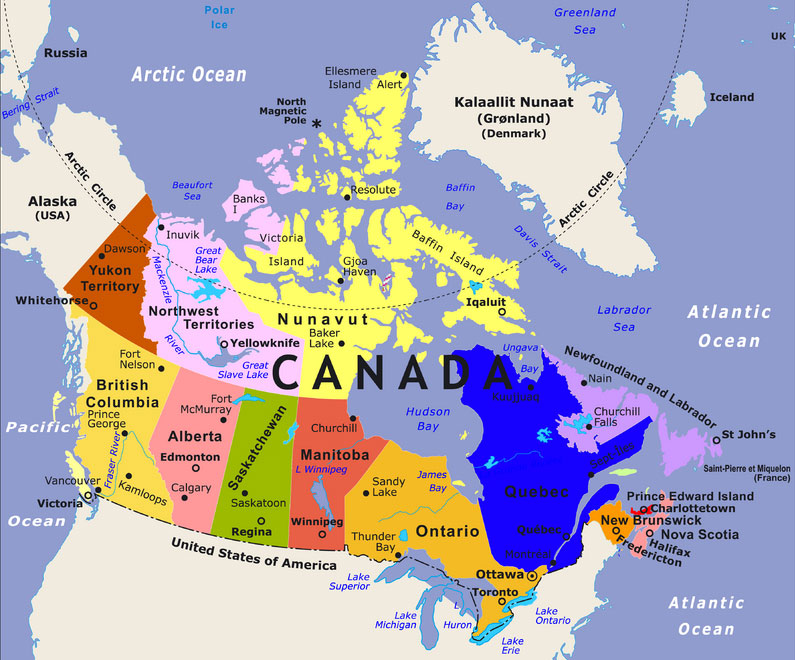
We're making a map of Canada!

  1. Outline Oceans BLUE.
  2. Label all PROVINCES and TERRITORIES. Use a PEN.
  3. Label each Capital City and the Capital of Canada. Use a PEN.
  4. Label each Ocean. There are THREE OCEANS around Canada.
  5. Label the GREAT LAKES.
  6. Use a DIFFERENT COLOUR for each province. Don't use blue.


Friday, 7 September 2018

English 11
Please finish "The Lottery" by Shirley Jackson. Do #5 a/b/c at the end of the story and complete a DEJ.


Tell all the truth but tell it slant — (1263)
BY EMILY DICKINSON


Tell all the truth but tell it slant —
Success in Circuit lies
Too bright for our infirm Delight
The Truth's superb surprise
As Lightning to the Children eased
With explanation kind
The Truth must dazzle gradually
Or every man be blind —

Wednesday, 13 June 2018

Here's an article about Argentina! Do these questions:


  1. Which countries and ocean touches Argentina?
  2. If you wanted to grow rice, which is the best place to grow it in Argentina?
  3. Why did many people in Argentina die when settlers came?
  4. Why did the people of Argentina fight against the Spanish?
  5. Why did the army take over Argentina? (hint: check the year)
  6. What kind of government does Argentina have today?


Monday, 11 June 2018

For our reading on Guatemala, answer these questions and do the writing assignment below.\

  1. Which oceans are on the east and west side of Guatemala
  2. Why are some of the forests in Guatemala called "cloud forests"?
  3. What is a dialect? How many dialects are spoken in Guatemala?
  4. Why was there a civil war in Guatemala?
  5. What was the result of the Spanish invasion of Guatemala?

Please use your words to describe Guatemala as a country. Please include some ideas about:

  • Nature
  • People and Culture
  • Government and Economy
  • History
Use your words. Read the article first to get some ideas, and summarize those ideas in your words.